Death of a Master Chef: A Brittany Mystery ( Kommisar Dupin: Book 9) by Jean-Luc Bannalec

Publisher: St. Martin’s Press, Minotaur Books

Date of publication: April 30th, 2024

Genre: Mystery, Crime, France, Mystery Thriller, Food, Thriller, Fiction

Series: Kommisar Dupin

Death in Brittany—Book 1

Murder on the Brittany Shores—Book 2

The Fleur de Sel Murders—Book 3

The Missing Corpse—Book 4

The Killing Tide—Book 5

The Granite Coast Murders—Book 6

The King Arthur Case—Book 7

The Body by the Sea—Book 8

Death of a Master Chef—Book 9

Purchase Links: Kindle | AbeBooks (in German only) | WorldCat (German title only)

Goodreads Synopsis:

Jean-Luc Bannalec’s internationally bestselling series starring Commissaire Georges Dupin returns with Death of a Master Chef.

Commissaire Georges Dupin is certain these first beautiful summer days in June would be perfect for a fun trip to Saint-Malo. In a region known as the culinary heart of Brittany, the paradoxical city is known for being a uniquely Breton, yet un-Breton, place. Their cuisine’s moto is voyages et aventures. Travel and adventure. Dupin would love to explore the internationally renowned cuisine one bite at a time. But to his chagrin, Dupin is there instead to attend a police seminar dedicated to closer collaboration between the Breton départements.

To prepare himself for what’s to come while in Saint-Malo, Dupin wanders through the halls of a local market—stopping to sample its wares as he goes—while admiring its aromatic orchestra. But Dupin’s morning is derailed when there’s a murder at a nearby stall. He quickly realizes this case is unlike any he’s worked on before. The police know the victim: Blanche Trouin, a grand chef of the region. They know the perpetrator: Lucille Trouin, Blanche’s sister and fellow successful chef in the area. The two had a well-known and public feud. After a bit of searching, Lucille is even in custody. The only thing they’re missing is the motive. And Lucille refuses to talk.

Saint-Malo doesn’t want any help from the visiting commissaires. Even Dupin’s assistant, Nolwenn, is telling him to stay out of it. But Dupin, along with a few of his Breton colleagues, can’t help but begin an investigation into why a chef killed her sister in the middle of a crowded market.


First Line

“A piece of the Brillat-Savarin, please.”


Important details about Death of a Master Chef

Pace: Slow but does pick up to medium by the end of the book.

POV: 3rd person (Dupin)

Series: Death of a Master Chef is the 9th book in the Kommissar Dupin series and can be read as a standalone.

Content/Trigger Guidance: Death of a Master Chef contains elements that include Alzheimer’s disease, alcohol consumption, blood, gore, body horror, dead bodies, death from falling, grief & loss depiction, death of a partner, death of a sibling, knife violence, suicide, and murder. Please read carefully if any of these triggers you.

Language: Death of a Master Chef contains mild swearing and language that might offend some people.

  • The author also uses French phrases (with English translation) throughout the book and sayings exclusive to the Brittany region.

Sexual Content: There is no sexual content in Death of a Master Chef.

Setting: Death of a Master Chef is set in present-day Saint-Malo, France (in the Brittany region).


My Review:

I haven’t read many books set in present-day France. However, I have read more than enough WWII-era books that described what Paris and the surrounding regions looked like at that time. My decision to read wasn’t solely based on that, though. The blurb definitely caught my attention, and being set in present-day France was also part of my decision.

Death of a Master Chef is the ninth book in the Kommissar Dupin series. It can be read as a standalone, but I suggest reading books 1-8 first. That way, you get background on Dupin and other police mentioned in the book.

This series (up to book 9) has been translated from German. If you look at the series listing above, I included all of the English versions. A few books haven’t been translated yet (it seems like St. Martin’s Press is working on that). If you read German, you’re good to go; if you want an English version, you might have to wait for the upcoming books.

The main storyline in Death of a Master Chef follows Dupin as he investigates the murder of a famous chef by her sister (and no, these are not spoilers; the author lets that be known in the first chapter). Dupin, who is in Saint-Malo for a police seminar, was in a farmer’s market when the victim (Blanche) was stabbed to death by her sister (Lucille). He is warned not to get involved but can’t help himself. Eventually, he gets assigned a team consisting almost entirely of Breton police. As Dupin follows the clues, more bodies are found. How are the bodies found connected to Blanche’s murder? The closer he gets to an answer, the more he gets stonewalled by the suspect, her friends, and her lawyers. The answer to why Blanche was killed will stun even Dupin.

I loved that the author laid everything out initially, except for the motive. Seeing the police go through their investigation, interview suspects, and eventually narrow down their motives was fascinating to me. I can see things like why the person did it and the reasons behind it fairly early in the book. But in this case, everything was revealed at the end of the book. 

I liked Dupin. His mind went a thousand miles a minute (and we were subjected to it all). He wrote everything down in his notebook and questioned when something seemed wrong. He also was fearless in tracking down leads that didn’t seem necessary. I also loved that he was a foodie. He relished every single bite of food and drink of petit cafe (small coffee) that he got. It opened my world to new food ideas (except for the seaweed butter, which I will never try).

The end of Death of a Master Chef was interesting. Lucille’s reason for what she did was heartbreaking. I was also surprised at what set off that final confrontation. If only that phone call had not been made (and that’s all I will say about that).

Many thanks to St. Martin’s Press, Minotaur Books, NetGalley, and Jean-Luc Bannalec for allowing me to read and review this ARC of Death of a Master Chef. All opinions stated in this review are mine.


If you enjoy reading books similar to Death of a Master Chef, then you will enjoy these books:


Other books by Jean-Luc Bannalec

The Madwomen of Paris by Jennifer Cody Epstein

Publisher: Random House Publishing Group – Ballantine, Ballantine Books

Date of publication: July 11th, 2023

Genre: Historical Fiction, Fiction, Historical, Mental Health, France, Mental Illness

Purchase Links: Kindle | Audible | B&N | AbeBooks | WorldCat

Goodreads Synopsis:

A young woman with amnesia falls under the influence of a powerful doctor in Paris’s notorious women’s asylum, where she must fight to reclaim dangerous memories—and even more perilously, her sanity—in this gripping historical novel inspired by true events, from the bestselling author of Wunderland.

“I didn’t see her the day she came to the asylum. Looking back, this sometimes strikes me as unlikely. Impossible, even, given how utterly her arrival would upend the already chaotic order of things at the Salpêtrière—not to mention change the course of my own life there.”

When Josephine arrives at the Salpêtrière she is covered in blood and badly bruised. Suffering from near-complete amnesia, she is diagnosed with what the Paris papers are calling “the epidemic of the age”: hysteria. It is a disease so baffling and widespread that Doctor Jean-Martine Charcot, the asylum’s famous director, devotes many of his popular public lectures to the malady. To Charcot’s delight, Josephine also proves extraordinarily susceptible to hypnosis, the tool he uses to unlock hysteria’s myriad (and often sensational) symptoms. Soon Charcot is regularly featuring Josephine on his stage, entrancing the young woman into fantastical acts and hallucinatory fits before enraptured audiences and eager newsmen—many of whom feature her on their paper’s front pages.

For Laure, a lonely asylum attendant assigned to Josephine’s care, Charcot’s diagnosis seems a godsend. A former hysteric herself, she knows better than most that life in the Salpêtrière’s Hysteria Ward is far easier than in its dreaded Lunacy division, from which few inmates ever return. But as Josephine’s fame as Charcot’s “star hysteric” grows, her memory starts to return—and with it, images of a horrific crime she believes she’s committed. Haunted by these visions, and helplessly trapped in Charcot’s hypnotic web, she starts spiraling into actual insanity. Desperate to save the girl she has grown to love, Laure plots their escape from the Salpêtrière and its doctors. First, though, she must confirm whether Joséphine is actually a madwoman, soon to be consigned to the Salpêtrière’s brutal Lunacy Ward—or a murderer, destined for the guillotine.

Both are dark possibilities—but not nearly as dark as what Laure will unearth when she sets out to discover the truth.


First Line:

I didn’t see her the day she came to the asylum. Looking back, this sometimes strikes me as unlikely.

The Madwomen of Paris by Jennifer Cody Epstein

As a former hysteria patient, nineteen-year-old Laure has been kept on at the famous Salpetrier hospital as an attendant in the Hysteria ward. Her life is lonely, and the work is endless, as she is the attendant to Rosalie, who Dr. Jean-Marie Charcot displays to explain what hysteria means. But that changes when Josephine arrives at the hospital. Covered in bruises and blood, Josephine is sure she committed a murder, but she can’t remember if she did. With rare beauty and highly susceptible to hypnosis, Josephine soon becomes Dr. Charcot’s star hysteric. But, with her memory returning and becoming more confident that she committed murder, Josephine and Laure start planning their escape. But Laure must find out if what Josephine did is the truth, and she must find a way to keep Josephine from going to the Lunacy ward. Will they escape? Did Josephine kill her former master?

When I was looking through the books on NetGalley, I came across this one. I was immediately drawn to the cover. Then I read the blurb and thought, “I must read this.” Since it was unavailable to request, I decided to wish on it. When I got the email saying that the publisher granted my wish, I was thrilled. Now that I have read it, I can tell everyone that this book was fantastic.

The Madwomen of Paris is a medium-paced book set in 19th-century Paris. The author took her time introducing Laure and explaining her background. She also took her time introducing Salpêtrière and explaining what hysteria was. Then she took time building up Josephine’s backstory. By the middle of the book, she amped up the slowness to a medium pace and kept it that pace until the end. There were some parts where I got frustrated with the pacing (mainly in the beginning), but by the end of the book, my irritation was gone. I understood why the author chose to pace the book as she did.

The main storyline concerns Laure, Josephine, Josephine’s amnesia, and their plans to escape. The storyline was well-written, and I got lost in the book as I was reading it. I loved that the author used real places (the Salpêtrière is a real hospital) and real people (Dr. Charcot was famous in 19th-century Paris). Those details added extra depth to the storyline. I also liked how the author explained hysteria and the different (and awful) ways of treating it.

I liked and pitied Laure. She suffered when she was younger, and I didn’t blame her for losing it. Losing two parents and an unborn sibling back to back would test even the strongest person. In a way, she did luck out when she was sent to Salpêtrière and again when she was hired to be an attendant. But she was lonely, so she got so caught up with Josephine.

I liked Josephine, but at the same time, I was wary of her. I didn’t doubt that her employer viciously attacked her, but I wondered if she had regained her memory of that night sooner than she had told Laure. At various points in the book, I wondered if she was using Laure. She sent Laure to check out the house where she killed her master. Her actions at the end of the book spoke volumes and just cemented my wariness of her.

There is a romance angle in the book that was interesting, and I liked it. But, I felt that it was one-sided, and Josephine used Laure’s feelings to further her ambitions.

An author’s note at the end of the book explains hysteria, how it encompassed many things that ail women (mentally ill—you’re hysterical, like sex—you’re hysterical, like the ladies—you’re hysterical). It was revolting to see how women were treated back then, and the author showed that repeatedly.

The end of The Madwomen of Paris was interesting, and I liked the author’s twist. It was something that I didn’t see coming. I did see what happened between Josephine and Laure coming, though, and it got me a little mad. I did like that Laure got her happy ending.

I would recommend The Madwomen of Paris to anyone over 16. There is violence, mild language, and sexual situations. I will warn that there are graphic scenes of a rape being reenacted through hypnosis, as well as Dr. Charcot showing what a body can do under hypnosis.

Many thanks to Random House Publishing Group – Ballantine, Ballantine Books, NetGalley, and Jennifer Cody Epstein for allowing me to read and review The Madwomen of Paris. All opinions stated in this review are mine.


If you enjoyed this review of The Madwomen of Paris, then you will enjoy these books:


Other books by Jennifer Cody Epstein

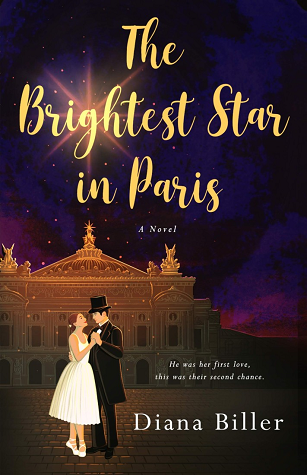
The Brightest Star in Paris by Diana Biller

Book Cover

Publisher: St. Martin’s Press, St. Martin’s Griffin

Date of Publication: October 12th 2021

Genre: Romance, Historical Fiction, Historical Romance, Paranormal, France, Ghosts, Doctors

Purchase Links: Amazon | Audible | B&N | WorldCat

Goodreads Synopsis:

In Diana Biller’s The Brightest Star in Paris, love is waiting; you only have to let it in.

Amelie St. James, the prima ballerina of the Paris Opera Ballet and the people’s saint, has spent seven years pretending. In the devastating aftermath of the Siege of Paris, she made a decision to protect her sister: she became the bland, sweet, pious “St. Amie” the ballet needed to restore its scandalous reputation. But when her first love reappears, and the ghosts of her past come back to haunt her, all her hard-fought safety is threatened.

Dr. Benedict Moore has never forgotten the girl who helped him embrace life again after he almost lost his. Now, he’s back in Paris after twelve years for a conference. His goals are to recruit promising new scientists, and, maybe, to see Amelie again. When he discovers she’s in trouble, he’s desperate to help her—after all, he owes her.

When she finally agrees to let him help, they disguise their time together with a fake courtship. But reigniting old feelings is dangerous, especially when their lives are an ocean apart. Will they be able to make it out with their hearts intact?


First Line:

The Palais Garnier was three days away from dress rehearsals.

the brighest star in paris by diana biller

When I started reading The Brightest Star in Paris, I couldn’t quite shake the feeling that I had met Amelie and Benedict before. As the book went on and the story unraveled, that feeling intensified. Then Alma was introduced, and I went, “Ooooh, that’s where I remember Ben from!” What book was it? The Widow of Rose House. It took me almost to when Alma came to Paris (with Sam and the rest of the family) to realize that.

The Brightest Star in Paris isn’t officially part of a series but is connected to The Widow of Rose Haven. If it were part of a series, it would be book 2. It also could be read as a standalone. While the Moore family is a large part of the book, they do not take it over. Instead, the focus is on Amelie and Benedict, with the Moores’ staying in the background.

The plotline for The Brightest Star in Paris was fast-paced and well written. There was very little lag. The only lag that I noticed was right after Amelie’s collapse on stage. It didn’t last long, only about a chapter, and didn’t derail the book. Instead, it gave me a moment to collect my thoughts and prepare myself for what the rest of the book would bring.

I will admit, I didn’t know much about Edwardian Paris when I started reading The Brightest Star in Paris. I didn’t know about the invasion, the thousands of “rebels” that were killed, or the rebuilding that went on afterward. I was alternately shocked and in tears by what Amelie went through and what she did to survive. To see her gradually break free of the constraints that she put upon herself was a wonderful thing but heartbreaking at the same time.

I don’t remember much about Benedict from The Widow of Rose House, only that he was a surgeon in the Civil War and came back sick. Now, when they said ill, I thought it was a physical illness. Instead, the author painted a picture of a teenager who went to war and returned with PTSD. The author wrote about what happened to Benedict and how he dealt with his PTSD (which wasn’t a thing back then). He was right to say that Amelie saved his life the day she met him. Later on in the book, he became the rock that Amelie leaned on when her world shattered.

I liked Amelie, but I did wish that she let Benedict in sooner than she did. Or at least told him about what her sister’s father was trying to force her into doing. Her seeing ghosts and communicating with them did come as a surprise, but I did like that she didn’t freak out (much) when she realized that they were dead. She resolved two of her ghosts’ issues, and the third ghost decided to tag along with her. There was a neat twist to that plotline that I should have seen coming. Instead, it surprised me, along with Amelie, and it made so much sense.

There is romance in The Brightest Star in Paris. That romance was Amelie and Benedicts. Of course, Amelie almost messed it up, but the way she resolved it was pretty awesome!! This was a second chance romance, and I thought it was super sweet.

The end of The Brightest Star in Paris was pretty good. The author was able to resolve all of the storylines in a way that I liked. She also hinted at another book with either Benedict’s foster brother or younger sister (well, perhaps both??). I can’t wait to read that book!!